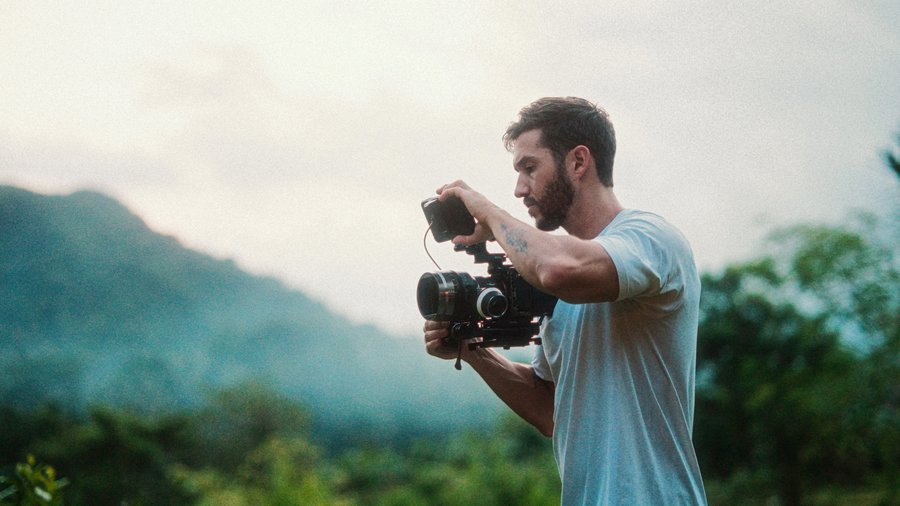
I'm guessing you want to make more engaging videos, right? These five tips will help you get there through better sound design.
1. Set the atmosphere with ambience and drones
Ambient sound effects are background layers that fill out your environment and pull the viewer into each shot. Take a shot of someone at an outdoor coffee shop: what would you actually hear there? People chatting, some birds and wind, maybe traffic off in the distance. Drop those in at a low volume. Quick Final Cut tip: select your ambient effects and switch the pan mode to Ambience, and they'll sound less front-and-center and more all-encompassing. Even if you record audio in camera for travel videos, a little ambience helps pull the viewer in. The other background layer is drones, monotone sounds that build suspense and emotion. You hear them under movie scenes constantly. Throw one under a shot and notice how much dread it can create.
2. Accent moments with hits and risers
A hit is a quick impact sound for immediate emphasis, think jump scares, or highlighting a change in shots. A riser rises in pitch or volume over time to build tension, and it doesn't have to be scary tension, it just keeps viewers a little on edge about what's coming. My favorite move: place a riser so the end of the rising sound lands right on the next shot or the moment you want to emphasize, then drop a hit right where the riser falls off. I did exactly this in my video portrait, adding a riser that built into the music drop and the close-up of the model.
3. Speed it up with a DAW like Audio Design Desk
Sound design can feel tedious, but it doesn't have to be. A dedicated tool like Audio Design Desk keeps you in the flow. Instead of hunting for a riser, lining up its climax to the right frame, then going back for a better one, you just press R and it drops a riser in. Press Command R to instantly swap it for another, Command up for a longer one, and it always keeps the sync point locked to your frame. Same for hits: press H, and no matter which hit you audition, the peak stays lined up with your title or cut. You can even build foley in real time with a trigger pad, hitting a number to drop footsteps or movement as the clip plays. Huge time-saver if you value your sanity.
4. Manipulate your sound effects to fit the visuals
Don't be afraid to bend a sound effect. Adjusting its pitch, adding effects, or changing its duration can make it fit your visuals way better. In a trailer I made, I used a Buddhist gong as a hit when the shot cuts to a monk, but the real gong was too low and clashed with the music, so I pitched it to match and it suddenly fit perfectly. Same with duration: if a whoosh for your transition is too long, just shorten it to match the movement. One warning, push a sound effect too far and it'll start to distort.
5. Get creative with your sounds
You don't need the literal sound of what's on screen. That airplane-interior sound in one of my shots? It's actually wind noise I pitched and muffled, plus a muffled clip of RC planes taking off. Got a dress flapping in the wind? A flag-flapping sound effect works better than an actual clothing-movement one. That's because bigger sounds at a lower volume beat realistic sounds at a higher volume, something Brandon Li taught me that I think about all the time. For a shot of a SWAT team busting through a door, I didn't hunt for a "breaking wood door" sound, I layered a gunshot for the lock breaking, a fridge door and a car door for the movement, and wood crashing for the door snapping open. Apart they're nothing, but layered together they nail it. Playing with random sounds is a huge part of why you'll end up loving sound design.
Sound sells the edit. Color sells the story.
Once your audio is immersive, mismatched color is what stands out. The FCP Color Grading Masterclass teaches the complete professional color workflow, featured on Apple's official Final Cut Pro Resources page.
Explore the Color Grading Masterclass